Linux network techniques - General
-
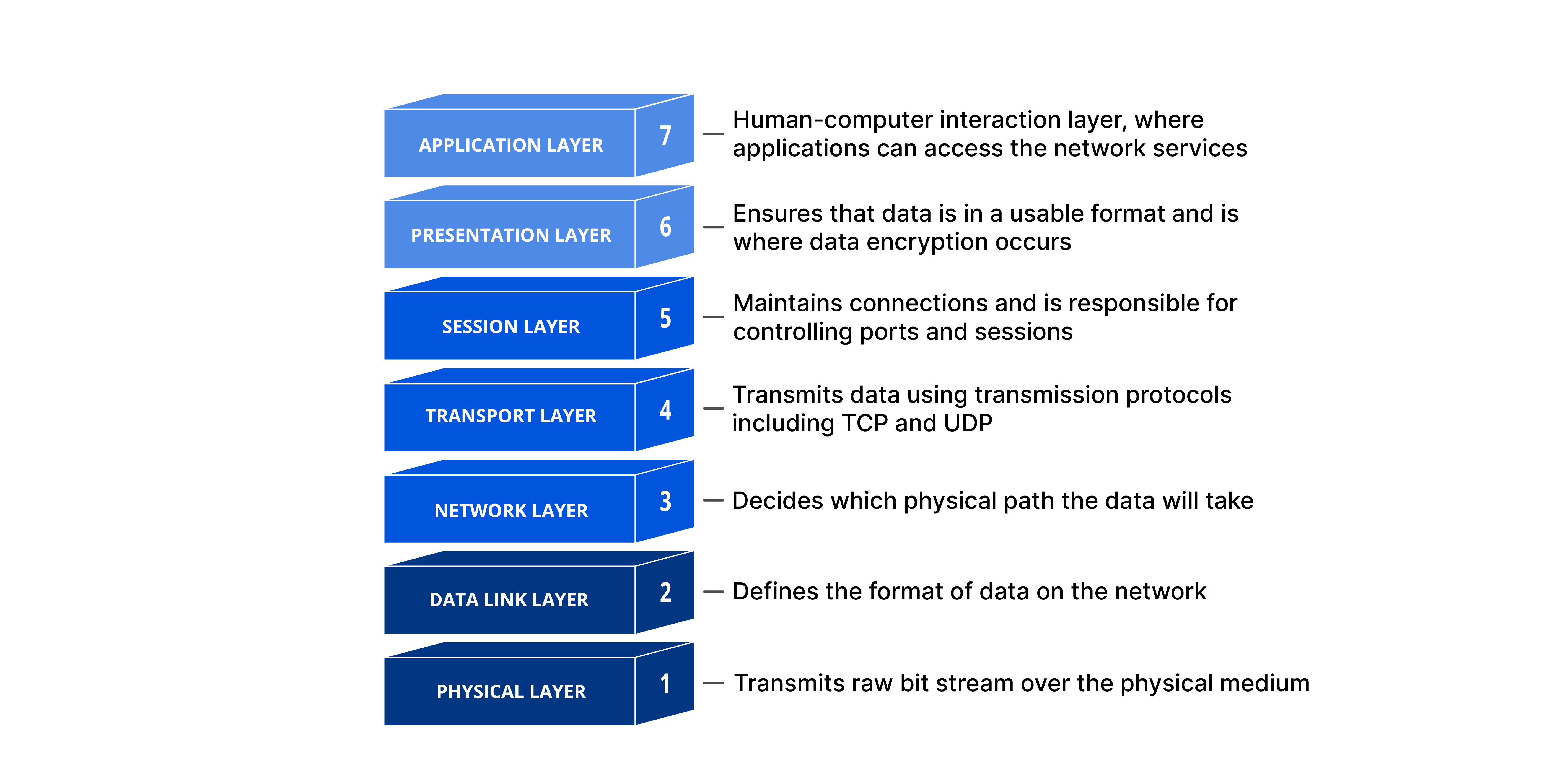
transmits data on layer 3 of the osi model
IPv4 inside the TCP/IP Stack
Layer |
Protocol |
|||
Application |
HTTP |
IMAP |
DNS |
SNMP |
Transport |
TCP |
UDP |
||
Internet |
IPv4, IPv6 |
|||
Network Access |
Ethernet, WLAN |
|||
logical address
Each host gets a unique address. The assignment is made automatically via DHCP (Dynamic Host Configuration Protocol) or by hand.
IPv4 Header
Each data packet has an IPv4/IPv6 header
BIT |
0-3 |
4-7 |
8-11 |
12-15 |
16-18 |
19-23 |
24-27 |
28-31 |
0-31 |
Version |
IHL |
Type of Service |
total length |
||||
23-63 |
Identification |
Flags |
Fragment offset |
|||||
64-95 |
TTL |
Protocol |
Header-Checksum |
|||||
96-127 |
Source address |
|||||||
128-159 |
Destination address |
|||||||
160-256 |
Options |
|||||||
Data |
||||||||
IP routing
Ip routing controls the path of a data packet through the network. The routing protocols can be static or dynamic, e.g. OSPF - open shortest path first.
IP name resolution
Network addresses are based on the IPv4 addresses. IPv4 addresses consists of a 32 bit sequence. The dot-decimal notation is used to increase readability.
IPv6 Protocol
IPv6 is the further development of IPv4. The two are not compatible with each other. It was developed because the address range of IPv4 was no longer sufficient. An extension is necessary, especially for the public address range. The switchover is far from complete; ongoing process.
IPv5 was developed as streaming protocol but It has never gained any significance and is no longer used.
IPv4 and IPv6 can be used as a dual stack. They are not compatible, but can be operated in parallel and a network card can have IPv4 and IPv6.
Advantages of IPv6 are: * bigger range of addresses (~ 340 sextillionen) * a host can have several IPv6 addresses for different scopes of application * addresses can be configured automatically * multicasting is possible with special addresses * supports faster routing; because of a smaler header * enables point to point encryption with IPsec * provides quality of service * data package lenght up to 4GB
IPv6 Multicast: The multicast addresses of IPv6 include network nodes and network services together in multicast groups. Each group is accessible via its own address. These groups can be assigned by a host itself and it can respond to packets addressed with the corresponding multicast address.
IPv4 vs. IPv6
IPv4 |
IPv6 |
|
Introduced |
1981 |
1999 |
Address lenght |
32bit |
128bit |
Address fromat |
Point-Decimal-Notation: 192.168.178.1 |
Hexadecimal Notation: 2FeA:F188:1524:BB10:2348:7340:B530:AABE |
Prefix |
192.168.0.0/24 |
2FeA:F188:1524::/48 |
Address range |
2 32 |
2128 |
IPv4 Classes and ranges
Address class |
Value in first octet |
Classful Mask (dotted decimal) |
Classful Mask (prefix notation) |
A |
1-126 |
255.0.0.0 |
/8 |
B |
128-191 |
255.255.0.0 |
/16 |
C |
192-223 |
255.255.255.0 |
/24 |
D |
224-239 |
N/A |
N/A |
E |
240-255 |
N/A |
N/A |
D - multicast
E - tests only
Ranges
Private address range in class A
Address class: A
Address range: 10.0.0.0 - 10.255.255.255
Default subnet mask: 255.0.0.0
Private address range in class B
Address class: B
Address range: 172.16.0.0-172.31.255.255
Default subnet mask: 255.255.0.0
Automated private IP adressing range in class B
Address class: B
Address range: 169.254.0.0-169.254.255.255
Default subnet mask: 255.255.0.0
Private address range in class C
Address class: C
Address range: 192.168.0.0-192.168.255.255
Default subnet mask: 255.255.255.0
Address class |
Assignable IP addresses |
A |
16.777.214 (224-2) |
B |
65.534 (216-2) |
C |
254 (28-2) |
| Classless interdomain routing means the use of a class C subnet mask ( 254 possible addresses) on a class B IP address (with originally 65,534 addresses). |
Next page: Useful commands